Magnesium en ontspanning van het zenuwstelsel

Magnesium and relaxation of the nervous system

Stress and mental strain are part of modern life. The body has complex systems to cope with stress, but nutrition can play a role in supporting these processes.

Magnesium is known as a mineral involved in regulating the nervous system and the stress response.

Magnesium and stress regulation

Magnesium plays a role in regulating the autonomic nervous system, which is responsible for the balance between activation and relaxation.

The mineral influences various neurotransmitters involved in stress responses and mood.

When magnesium levels are insufficient, some studies suggest this may be associated with increased stress sensitivity.

Scientific insights

A scientific review by Boyle et al. (2017), published in the journal Nutrients, analyzed various studies on magnesium and stress.

The authors concluded that magnesium supplementation may potentially contribute to better regulation of stress-related processes.

Although more research is still needed, the literature suggests that magnesium may play a role in supporting a balanced stress response.

Magnesium L-threonate and the brain

Magnesium L-threonate is being specifically studied for its ability to increase magnesium levels in the brain.

By improving the availability of magnesium in the central nervous system, this form may potentially contribute to processes involved in relaxation and neuronal stability.

This makes magnesium L-threonate as a supplement an interesting topic within the broader research field of micronutrients and mental health.

Reference

Boyle et al., 2017 – Nutrients
https://www.mdpi.com/2072-6643/9/5/429
Back to blog

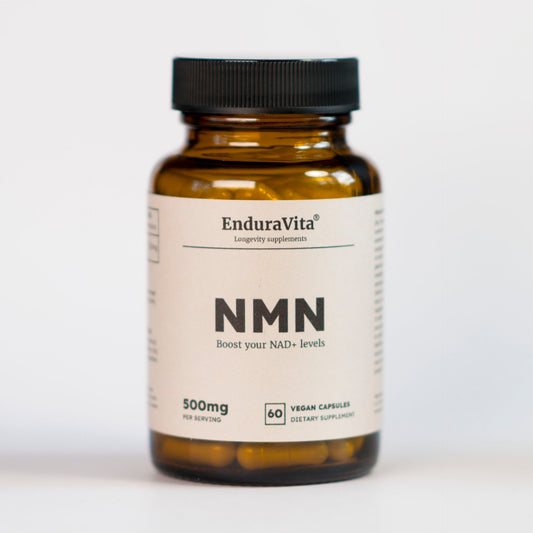
Order one of our Premium NMN products now.

  • Highest purity & maximum biological uptake

    We opt only for the highest quality supplements, ensuring maximum absorption by the body. For instance, our NMN boasts a purity level of >99.8%.

  • Independently laboratory tested

    All supplements undergo double testing and verification in a laboratory for quality, including in NL(EU) or USA.

  • High-quality production (GMP)

    Our supplements are produced according to strict requirements for good and safe production, adhering to various ISO standards within this framework.

  • Nieuwe humane studie naar magnesium L-threonaat (Magtein®): wat zeggen de resultaten écht?

    New human study on magnesium L-threonate (Magte...

    Magnesium supplements are more popular than ever, but not every form of magnesium gets the same level of scientific attention. One of the most discussed forms in recent years is...

    New human study on magnesium L-threonate (Magte...

    Magnesium supplements are more popular than ever, but not every form of magnesium gets the same level of scientific attention. One of the most discussed forms in recent years is...

  • Nieuwe humane studie: NMN verhoogt NAD⁺ bij mensen, en het darmmicrobioom lijkt een sleutelrol te spelen

    New human study: NMN increases NAD⁺ in humans, ...

    In January 2026, an interesting new human study was published in the scientific journal Nature Metabolism. The researchers compared three well-known NAD⁺ precursors: NMN (Nicotinamide Mononucleotide) Nicotinamide Riboside (NR) Nicotinamide...

    New human study: NMN increases NAD⁺ in humans, ...

    In January 2026, an interesting new human study was published in the scientific journal Nature Metabolism. The researchers compared three well-known NAD⁺ precursors: NMN (Nicotinamide Mononucleotide) Nicotinamide Riboside (NR) Nicotinamide...

  • Meer dan een sport­supplement: de rol van creatine in hersenenergie

    More than a sports supplement: the role of crea...

    Although creatine is best known as a supplement for muscle performance, the molecule also plays an important role in the brain’s energy metabolism. The brain uses about 20% of the...

    More than a sports supplement: the role of crea...

    Although creatine is best known as a supplement for muscle performance, the molecule also plays an important role in the brain’s energy metabolism. The brain uses about 20% of the...

1 of 3